Secretariat for the Implementation of the Strategy on Countering Extremism and Terrorism in the Republic of Tajikistan for 2021 – 2025
Preventing violent extremism in Central Asia (PREVECA) funded by the German foreign office Tajikistan component
Secretariat for the Implementation of the Strategy on Countering Extremism and Terrorism in the Republic of Tajikistan for 2021 – 2025
Establishing a New Coordinating Structure

Background
Radicalization, violent extremism and terrorism pose a challenge for the Republic of Tajikistan. According to estimates, more than 1000 followers of Islamic State (IS) have left Tajikistan for Syria and Iraq. Other sources presume that a similar number has been fighting with Al Qaeda and the Taliban in Afghanistan since the 1990s. With the Taliban having gained power in Afghanistan and IS having lost its core territory in the Middle East, there is growing evidence and concern that extremists are expanding their influence into Central Asia. Moreover, recent developments in the Russian Federation might lead to a wave of returnee migrant workers struggling to find employment in Tajikistan. With the remaining problematic unemployment rate in the country, returned migrant workers will increase unemployment rates and are expected to be at a high risk of radicalization.
The Government of Tajikistan tackled the risks posed by these developments early on with its first national Strategy for Countering Extremism and Terrorism and Action Plan for 2016-2020. An evaluation of measures to implement the aforementioned Strategy lead to developing the current Strategy on Countering Extremism and Terrorism in the Republic of Tajikistan for 2021–2025 (in the following referred to as the Strategy). The title of the document may suggest otherwise, but a close look reveals that it substantially follows a preventive logic and the Action Plan foresees mainly preventive measures.
The current Strategy is based on a comprehensive understanding of the root causes and the complex repercussions of violent extremism and terrorism for state and society as a whole. Hence, the approach against the threats by violent extremism and terrorism in the Strategy combines a whole of government with a whole of society approach, acknowledging that short and long-term perspectives need to be balanced, and that measures of law enforcement need to be inextricably linked and combined with preventive measures.
Consequently, implementing the Strategy, particularly regarding its long-term preventive goals, requires the systematic interaction of numerous governmental and non-governmental actors and their measures, instruments and contributions from many walks of life. According to the Strategy, the General Prosecutor’s Office (GPO) has been assigned the task to act as the overall coordinating body responsible for implementing the Action Plan of the Strategy according to the paragraphs 34-35 of the Strategy and paragraph 2 of the Presidential Decree dated from June 1st, 2021 #187. The Strategy indicates that “The General Prosecutor's Office of the Republic of Tajikistan is responsible for coordinating the activities of State bodies, civil society institutions and international organizations in implementing the Strategy and monitoring of its implementation. The Ministry of Foreign Affairs and other State bodies of the Republic of Tajikistan carry out their activities to involve public and international organizations, as well as embassies and missions of foreign States, in the implementation of the Strategy through the General Prosecutor's Office of the Republic of Tajikistan”.
Effectively coordinating such a multitude of actors in a coherent and results-oriented manner exceeds the existing personnel and institutional capacities of the GPO by far. This bears the risk of shortages in implementing the Strategy, especially on the preventive side.
Accompanying the Process of Establishing the Secretariat
Concept Development
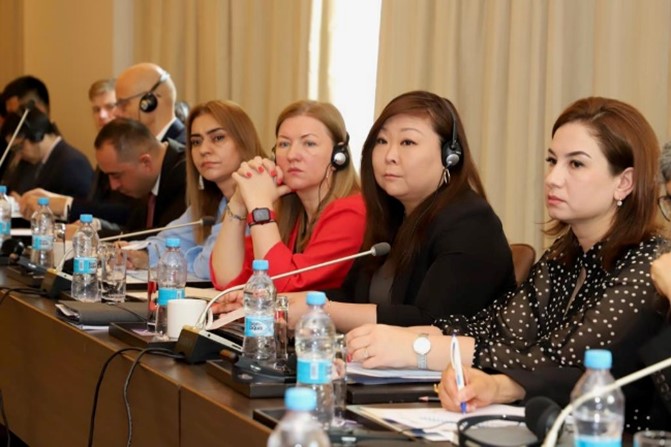
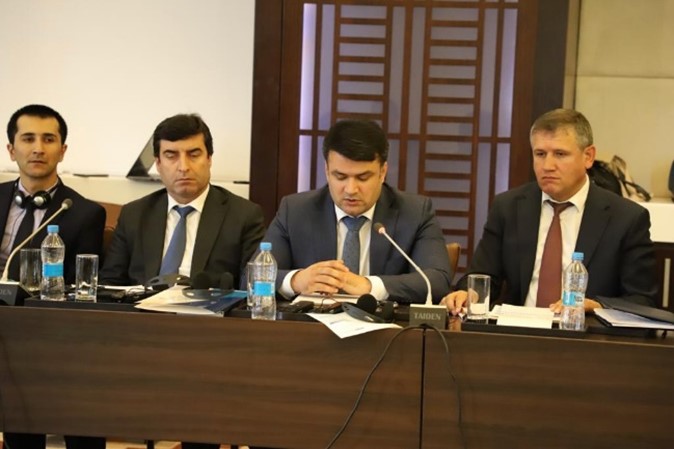
Against the aforementioned background, the GPO requested PREVECA project to support with the establishment of a Secretariat as an interagency coordinating body to implement the national Strategy in March 2022. Based on parameters given by GPO, PREVECA developed a first conceptual draft for the Secretariat. This draft, including a personnel structure and estimated budget, was discussed and jointly finalized in May 2022 and served also as a proposal which was presented by GPO to international agencies with a request for funding of advisor positions.
 |
|
Continuous Advice and Support
After finalizing the concept, PREVECA accompanied and supported GPO in preparing the establishment of the Secretariat throughout the summer and fall of 2022. This included procedural advice on fund raising efforts and on communication with potential donors and supporters of the Secretariat; administrative and financial support e.g. of meetings with international partners; and a continuous discussion on the necessary preconditions for making the Secretariat come to life. Benchmarks in this process were meetings of the Coordination Platform on 18 August 2022, where the plan to establish the Secretariat was officially announced, the address by the President at the High Level meeting in the context of the Dushanbe process on 18 October 2022, where he mentioned the establishment of the Secretariat, and the formal inaugural meeting of the Secretariat on 04 November 2022. Since then, several coordination meetings were held under the auspices of GPO to request international support for the Secretariat and reintegrating returnees with PREVECA supporting on request.
Establishing a new administrative body resembles building the ship at sea to a certain extent, especially considering the gap between high outcome expectations on the one hand and subject matter related and procedural uncertainties on the other. This was particularly true for the Secretariat by end of 2022.
Most newly appointed Secretaries had only little understanding and knowledge of the wider topic of preventing and countering violent extremism; many of them had not even read the Strategy before. Moreover, most of them did not know each other and were not used to productive interagency cooperation.
In order to create a joint subject matter related understanding and a certain group identity among Secretaries, PREVECA conducted two workshops in November 2022 and January 2023 in the framework of official Secretariat meetings.
Personnel Recruitment and Capacity Building
One of the main challenges was the filling of Secretary positions by other Government agencies and the recruitment of additional positions funded by international partners. The role of PREVECA project was to draft generic job descriptions, support GPO in the process of informing international partners about the endeavor and to accompany GPO in the process of launching the process with national Government agencies through subject matter and procedural advice. By November 2022, all relevant ministries and agencies according to the national Strategy had appointed representatives to the Secretariat. The generic job descriptions developed by PREVECA were used to familiarize the Secretaries with their new role and tasks.
In addition, PREVECA supported GPO in encouraging international support by funding advisors to the Secretariat from November 2022 throughout the first half of 2023. To set an example and enable an initial operational capability of the Secretariat, PREVECA hired three advisors to work for the Secretariat in April respectively May 2023 for six months and again one advisor in November 2023 for another 11 months. The joint efforts of PREVECA and GPO to encourage more international support bore fruit in November 2023, when UNDP hired two additional advisors to the Secretariat.
 |
 |
Study Tour to Abu Dhabi in February 2023
Subject of these workshops were a familiarization with the national Strategy and with the different roles and mandates of ministries and agencies in preventing and countering extremism and terrorism.
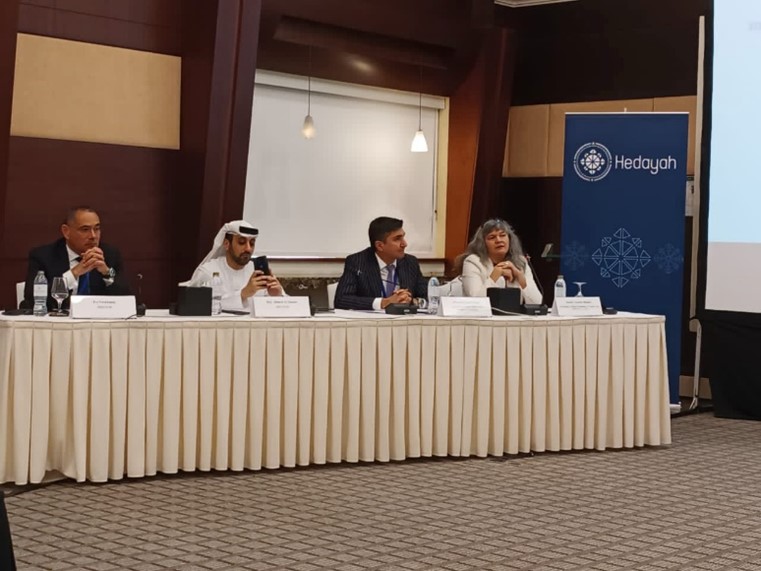
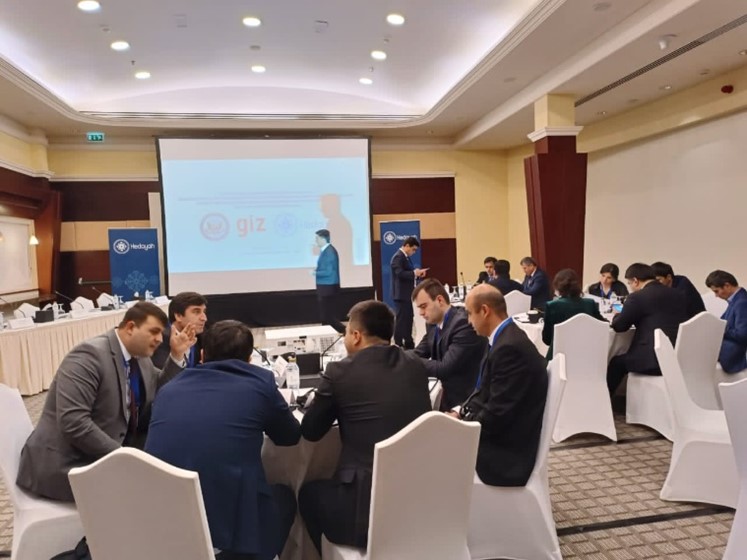
Based on these preparatory workshops, PREVECA in cooperation with Hedayah, conducted a 5-day study tour to Abu Dhabi for 20 Secretaries and other representatives. Besides thorough input on preventing and countering violent extremism, the workshop included practice-oriented work on returnee integration programs and on individual action plans for each agency derived from the national Strategy and Action Plan.

Study Tour to Abu Dhabi in February 2023
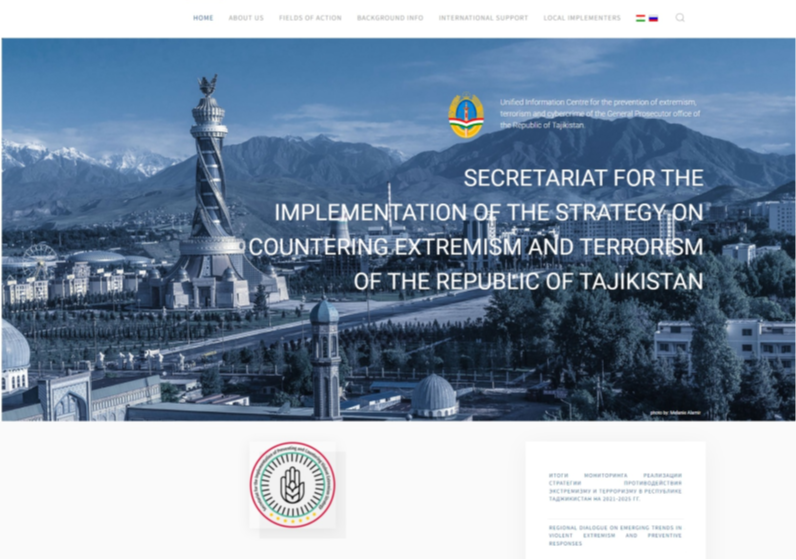
Secretariat Website
Building on efforts by the OSCE to establish a website for the Secretariat, PREVECA project supported GPO to finalize the content structure and start filling the website with content. The project focused on a representation of content from local civil society organizations on the website and on preparing the content on international contributions. Moreover, it collected documents or funded translations of documents of the Government of Tajikistan to be published on the website. Moreover, a consultant hired by PREVECA dedicates up to one day a week of his work time to support the Secretariat in filling, maintaining and updating the website.
Equipment and Infrastructure
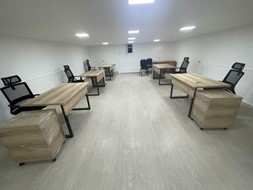
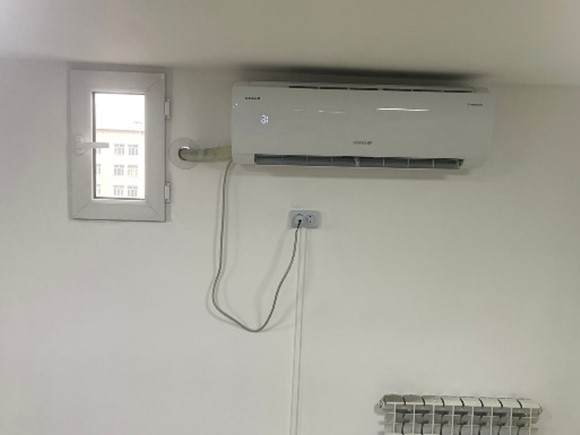
It had been difficult to find a suitable venue for the office of the Secretariat due to lack of funding and available cost-free space, but as an interim solution, PREVECA project supported GPO to find an office space in the premises of National University campus in Dushanbe. PREVECA funded and organized the renovation and equipment of the offices with air conditioners in May and July 2023, while the OSCE purchased electronic equipment such as laptops, cell phones and a printer. In addition, PREVECA project has been bearing the running costs for internet in 2022 and 2023. Moreover, on request of the General Prosecutor, PREVECA funded specialist electronic equipment in 2022 which is being used for data collection and analysis in the context of preventing and countering extremism and terrorism.
 |
 |
Confidence Building
The network building function of the Secretariat with experts and civil society organizations has received rather little attention so far and the process is still fledgling. PREVECA has been promoting and supporting this process on several different strands. Primarily, the project has worked directly with civil society organizations (CSO) and has been trying to strengthen their role in preventing and countering extremism since summer 2023 by fostering the creation of a network of CSO engaged on the topic. A number of measures and events are foreseen in the course of 2024 to bring together the Secretariat and CSO in order to improve mutual trust and understanding.
Besides, PREVECA project had commenced the process of creating an expert group as a consultative unit of subject matter experts from academia and media in March 2023. The expert group was designed to serve as a pool of independent expertise for improving knowledge and evidence-based decision making of the Secretariat and the represented Government agencies therein. Due to personnel changes and other more pressing priorities in the process of kick-starting the work of the Secretariat, the work on the expert group has been suspended since May 2023.
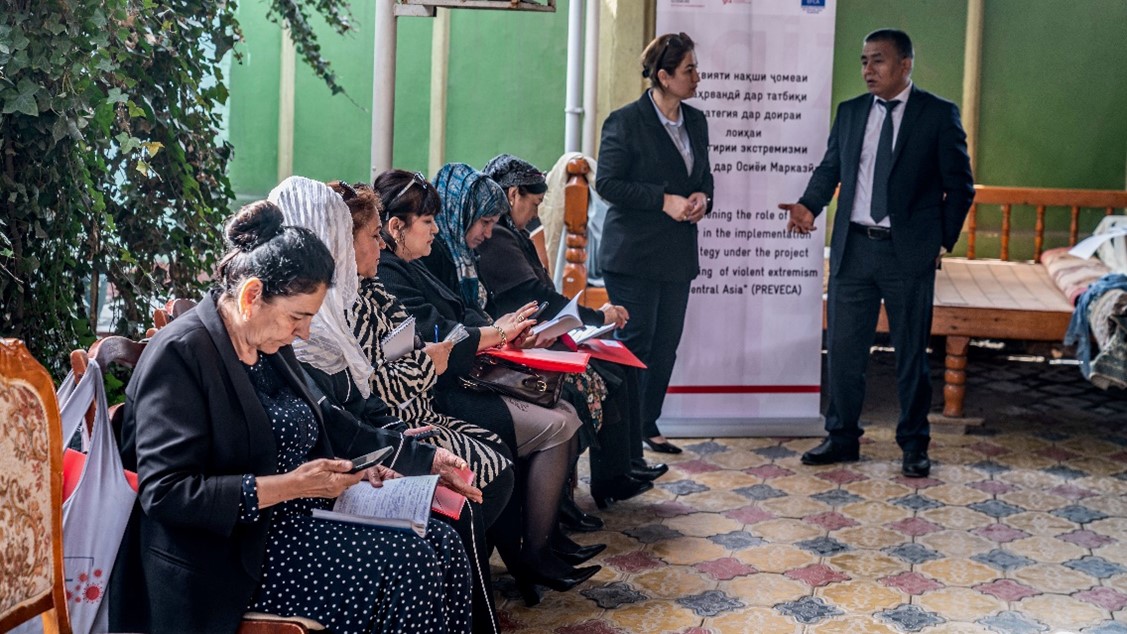
Round Table in Bokhtar with CSO
Secretariat Functions
The Secretariat is supposed to enable the effective planning, steering, monitoring and evaluation of the implementation process of the Strategy, and thereby ensure the effective implementation of the Strategy in a whole of government and whole of society approach.
The Secretariat is expected to perform the following five core functions:
- Political steering and supervision: The implementation of the Strategy on Countering Extremism and Terrorism is an important element of the overall efforts of developing and preparing the country to be fit for the challenges of the decades to come, such as the National Development Strategy of the Republic of Tajikistan for the period up to 2030, the Strategy of the State Youth Policy in the Republic of Tajikistan for the period up to 2030, the National Strategy for Enhancing the Role of Women in the Republic of Tajikistan for 2021-2030 and numerous other documents in the areas of social, economic and educational policy. The task of the Secretariat is to coordinate the implementation of the Strategy with other policy goals and strategies.
- Overall planning and coordination: The Action Plan of the Strategy presents the framework for the implementing process. The role of the Secretariat is to further operationalize the Action Plan in consultation with relevant national and international stakeholders. It is supposed to assign national lead agencies along each field of action and to support the lead agencies with the definition of roles and responsibilities and the process of translating goals into expected output .The Secretariat has a particular role to play when it comes to supervise those fields of action that are closely related or interdependent, such as coordinating the rehabilitation and reintegration of returnees from Syria and Iraq.
- The coordination function also implies liaison and cooperation with international stakeholders. The Secretariat is meant to serve as a driver for network building and bonding with international partners, governmental and non-governmental agencies in the thematic area of preventing and countering violent extremism and terrorism. The graphic in Annex 1 depicts the anticipated overall coordination structure.
- Dialogue and network building: The complex nature of the threats posed by violent extremism and terrorism requires a national debate and awareness that reach far beyond the stakeholders engaged in implementing the Strategy into civil society. In order to initiate respective dialogue, the Secretariat is supposed to initiate or foster the creation of two concentric networks, namely
a national network of subject matter experts, comprising of government agencies, non-governmental agencies, civil society groups, academia and the media working in the fields of action delineated in the Strategy, and 2. the a second concentric looser and broader network of civil society organizations and individuals representing all relevant target groups, in particular vulnerable groups, such as women, children from disadvantaged backgrounds, prisoners or migrant workers and their families. - Information and communication: The Secretariat is tasked to launch an information campaign and encourage a broader societal debate about prevention of violent extremism, building on the two concentric networks of experts and civil society groups. It is supposed to define core messages and to ensure that information and communication are taken into account as a cross-cutting aspect in all fields of activity.
- Monitoring and evaluation: Preventing and countering violent extremism and terrorism require long-term efforts and will not be accomplished with achieving the operational goals of the Strategy in 2025. The Secretariat’s role is to define categories to measure progress and success for implementing the Strategy by developing monitoring mechanisms together with the lead agencies of the different fields of action.
Outcomes
Measured against the challenges, the progress of establishing and filling the Secretariat with life was remarkable in the given time span, though its mid- to long-term sustainability remains to be seen.
After having been formally inaugurated in November 2022, it took about six to seven months until the Secretariat started to establish an own and independent work rhythm. Since the inaugural meeting in November 2022, regular meetings of the Secretariat in full format had been held with its latest 6th meeting in September 2023. Representatives of ministries and agencies in the Secretariat regularly report on their activities regarding the implementation of the Strategy at these meetings. In August 2023, a charta for the Secretariat was signed by the General Prosecutor, which completed the institutionalization of the body and set it on more solid grounds.
At the 6th Secretariat meeting, it was reported that in the months from May to August 2023, the Secretariat had developed an own annual work plan and had conducted a number of trainings and meetings at local level in different districts related to the topic of reintegrating and rehabilitating returnees from Syria and Iraq. A draft program and action plan on reintegrating and rehabilitation returnees was presented at that meeting and feedback from the other ministries and agencies requested.
The annual work plan foresees a training for government agencies on monitoring methods, monitoring the progress of implementing the strategy in cities and regions, aspects of financing the Secretariat and reporting on the work in 2023.
It should be positively highlighted that in April/May 2023, PREVECA project had successively started to withdraw from accompanying and supporting the day to day operational processes of the Secretariat. Ownership and initiative were fully taken over by the General Prosecutor’s Office over the summer of 2023 and the progress has been driven by them ever since. This happened mainly due to the efforts of highly engaged individuals, supported by the hired consultants by PREVECA.
Outlook
In the near future, the Secretariat will move to the newly built premises of the GPO and work closely with the newly created Unified Information Centre, a body established in 2023.
With this development, the Secretariat has gained a life of its own and the quality, depth and effectiveness of its work have moved beyond the influence and mandate of PREVECA project. PREVECA, in support of and in close and trusted cooperation with the GPO, has – figuratively speaking - played the role of a midwife in establishing the new structure and accompanying its first steps.
The future of the Secretariat will be the sole responsibility of the General Prosecutor’s Office and the ministries and agencies involved. PREVECA project will continue to support single events if requested, besides financing one advisor until September 2024.
