Improving knowledge on and application of the Strategy on Countering Extremism and Terrorism
Preventing Violent Extremism in Central Asia (PREVECA) Tajikistan Component
Improving knowledge on and application of the Strategy on Countering Extremism and Terrorism
Training series for representatives of districts and jamoats
Background
Tajikistan is facing serious threats from extremism and terrorism. The Strategy on Countering Extremism and Terrorism for the period 2016-2020 represented a comprehensive reply to these challenges. This helped prevent a spread of extremism and terrorism, but many challenges remain. With the subsequent Strategy for the period 2021-2025, the Government of Tajikistan has shown resolve to further consequently pursue its efforts.
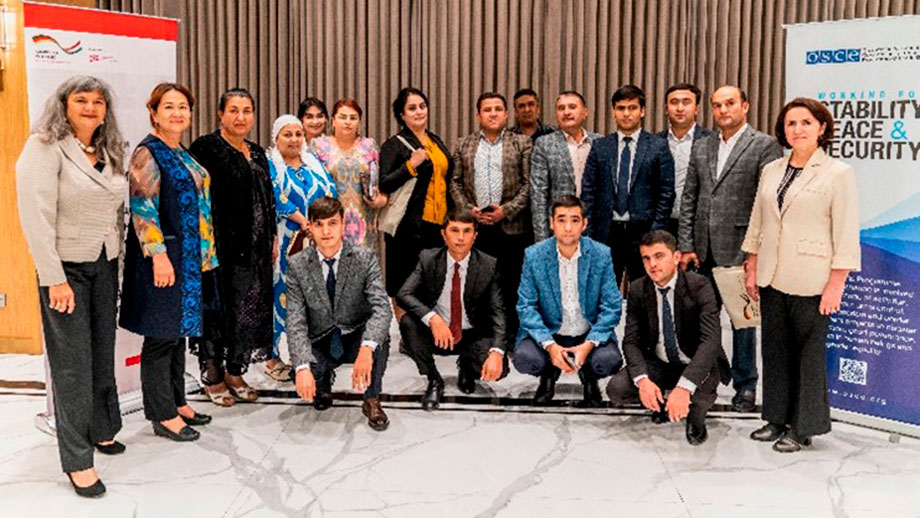
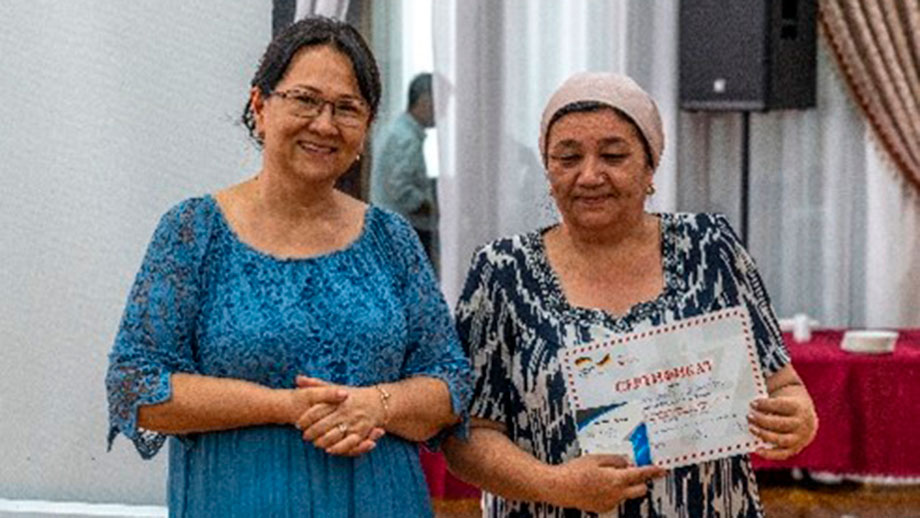
Among other factors, the current Strategy mentions the need to improve “professional development of employees of State bodies and local government bodies of towns and villages, as well as teaching staff, working with young people, involved in combating extremism and terrorism in order to more effectively prevent extremism and terrorism. In this context, the GIZ program on Preventing Violent Extremism in Central Asia (PREVECA), funded by the German Foreign Office, in close coordination and cooperation with the General Prosecutor’s Office, has conducted a series of altogether 26 trainings for local government employees.
 |
 |
PREVECA built on trainings which were designed and organized by the OSCE in 2022. In September 2022, GIZ conducted the first of a series of 10 trainings in a joint effort with the OCSE in 2022, covering Dushanbe and surrounding districts. Based on some adjustments, the training series was continued in 2023 under the aegis of GIZ alone and was extended to further districts in Khatlon, the Region of Republican Subordination and Sughd.
Goals and Content
The training series pursued two main goals:
- to inform participants about the purpose and main content of the Strategy and
- to improve their capacities to contribute to implementing the Strategy in their own workplace.
|
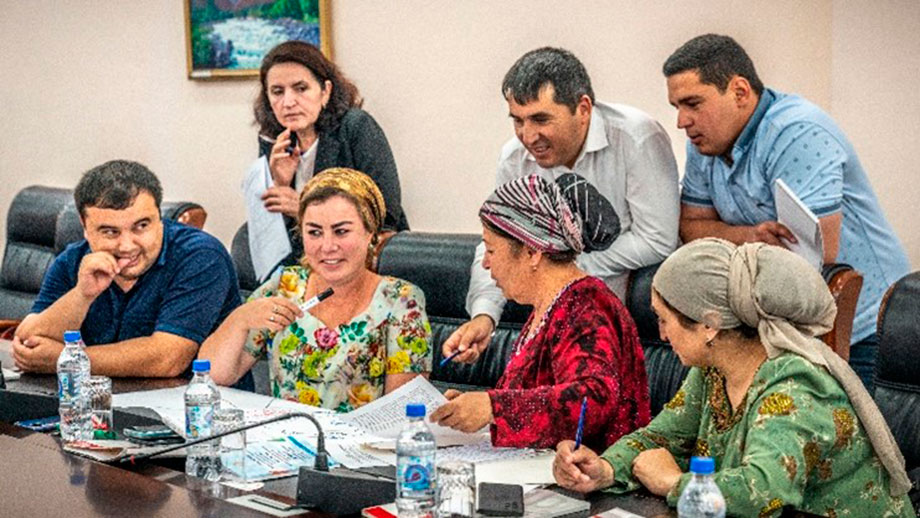
To this end, the first day of the 2-day trainings introduced participants to the legal framework for preventing and countering extremism and terrorism in Tajikistan, gave an overview over the main content of the Strategy, discussed terminology and sensitized them on the role and levers of civil society in extremism prevention. The second day was dedicated to practice-oriented capacity building, such as methods to analyze problems at jamoat (local community) or district level and develop solutions. Participants were encouraged to work on examples related to their own practical experience, thereby breaking down the input of the first day to their own work context. |
 |
Trainers and methods
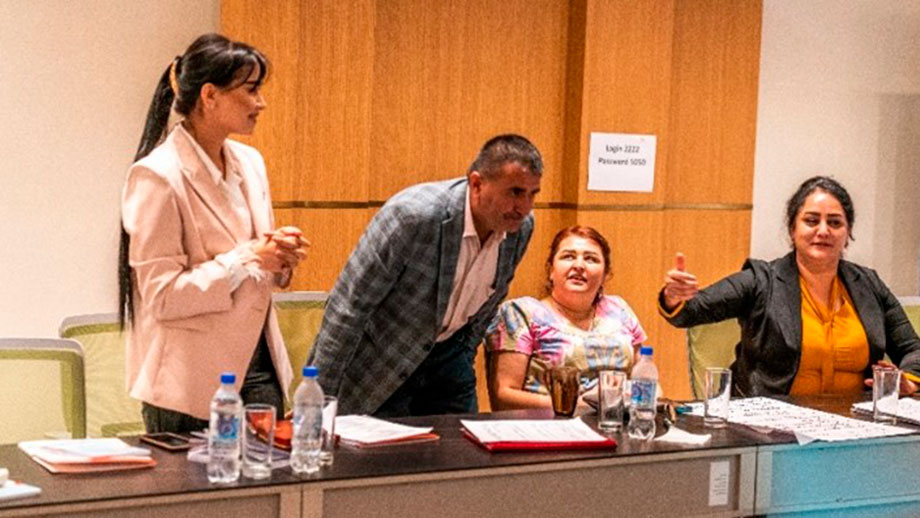
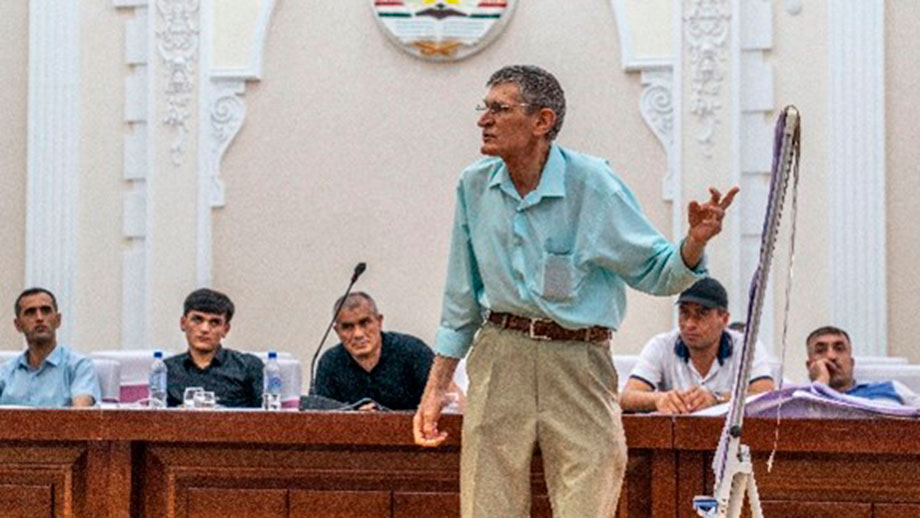
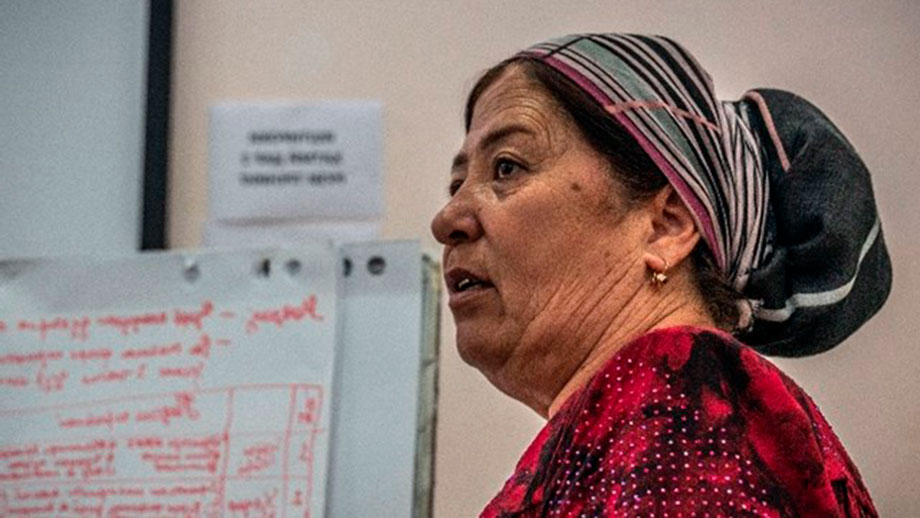
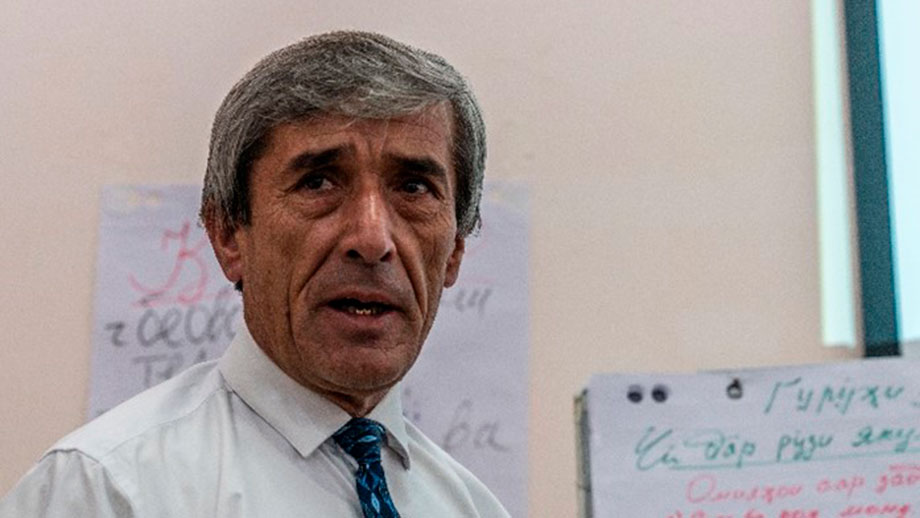
| Methodologically, the training series was designed as a team-teaching approach, representing three different fields of subject matter expertise. While the legal parts where conducted by a representative of the General Prosecutor’s Office, the parts on the terminology and the role of civil society were taken over by a person with an academic teaching or research background. | 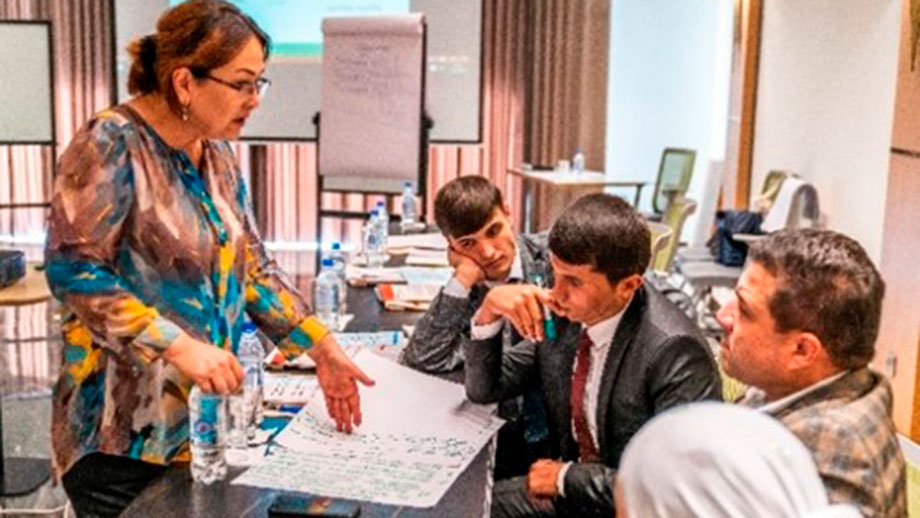 |
|
 |
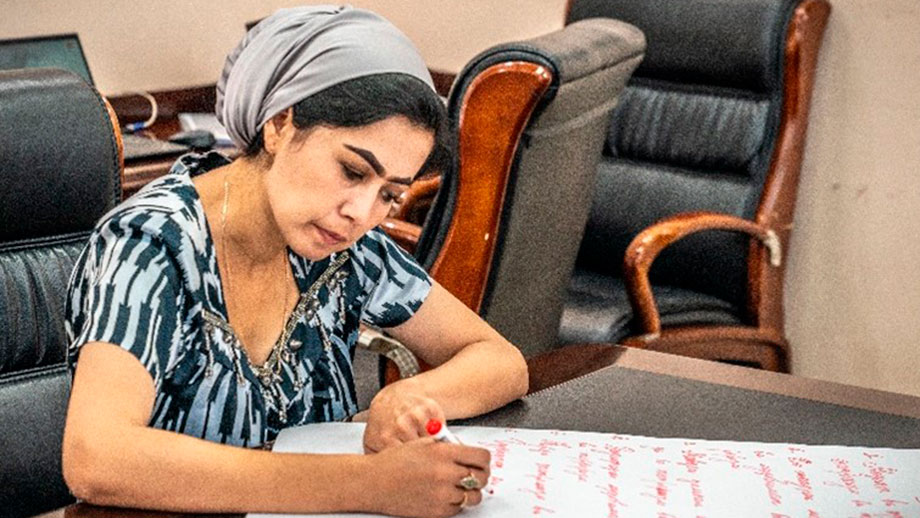
The practice-oriented second day was held by a trainer, and moderator with experience in civil society organizations and private enterprise. | |
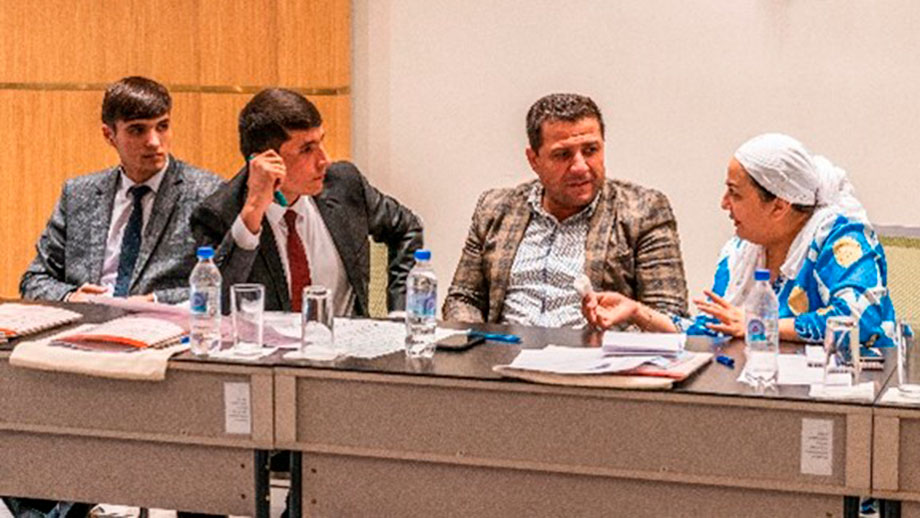
| Besides the composition of the trainer team, the training put as much emphasis as possible on applying interactive methods to actively engage participants. | 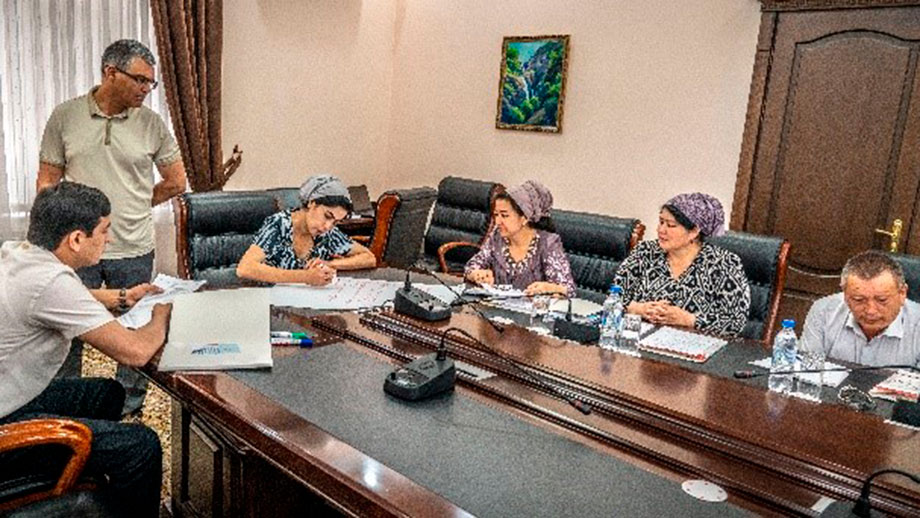 |
|
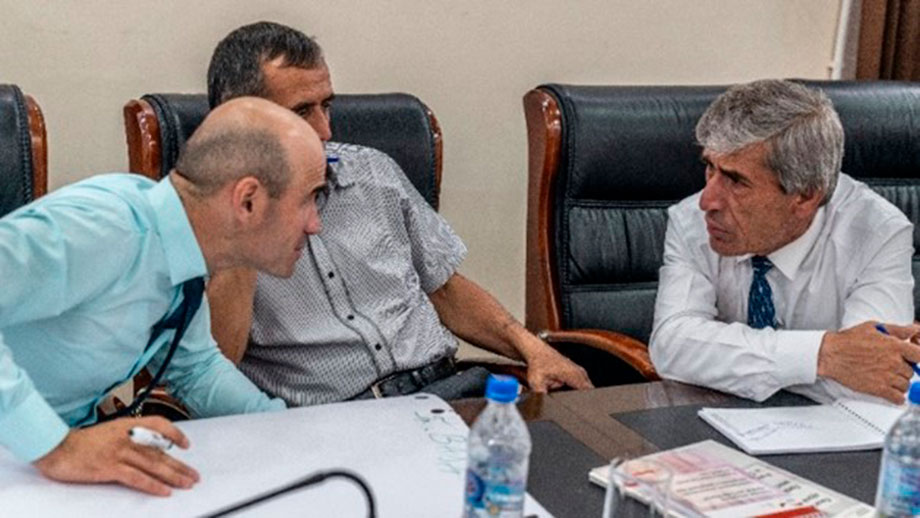 |
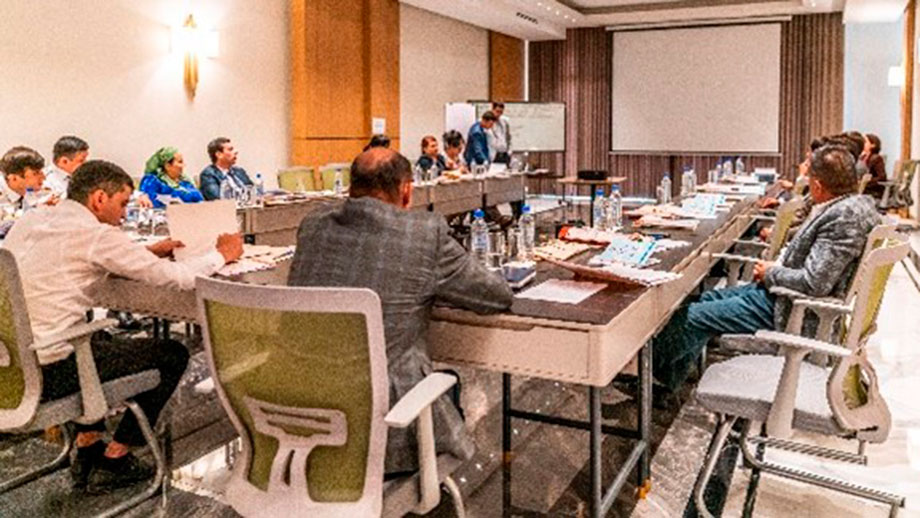
Overall, the trainings utilized a methodological mix of input, Q&A, group work and energizing games. |
Organization
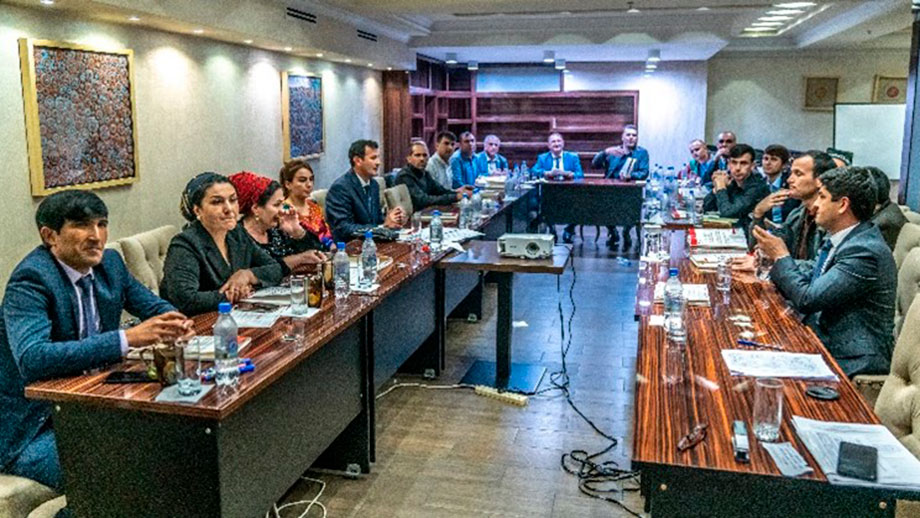
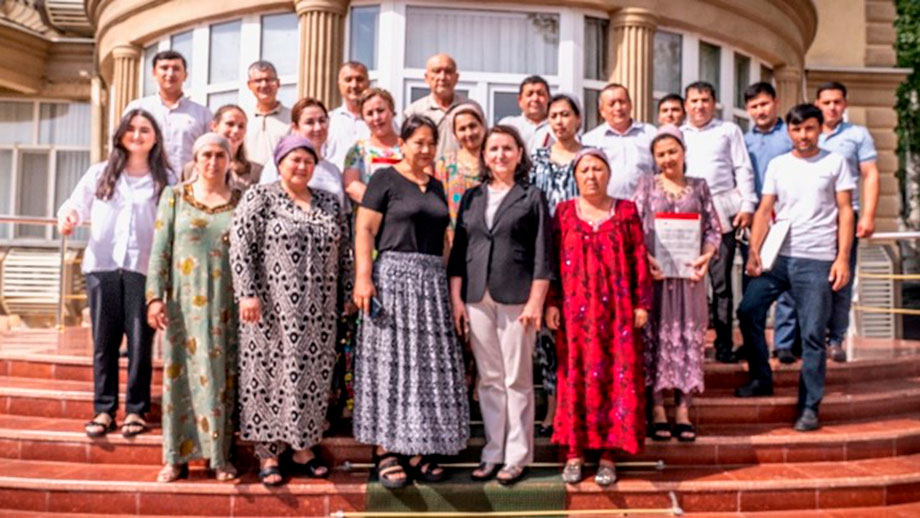
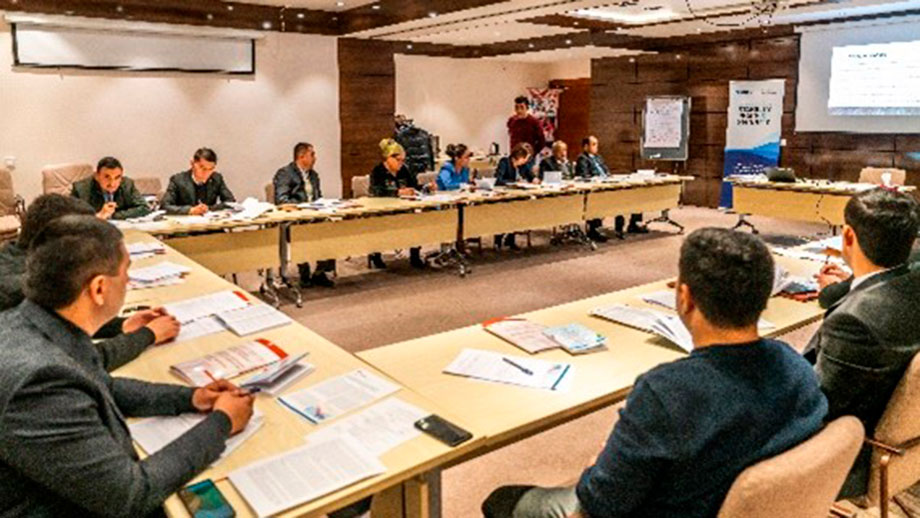
The trainings comprised between 20 and 35 participants, depending on the size of the jamoat or district. Trainings were conducted in venues with sufficient space and technical equipment, accompanied by full catering for coffee breaks and lunch. Participants who traveled from locations further away than one and a half hours from the training venue were accommodated in hotels and group transportation was arranged. Those participants who lived close to the training venue, took care of transportation by themselves and were reimbursed according to the national standards.
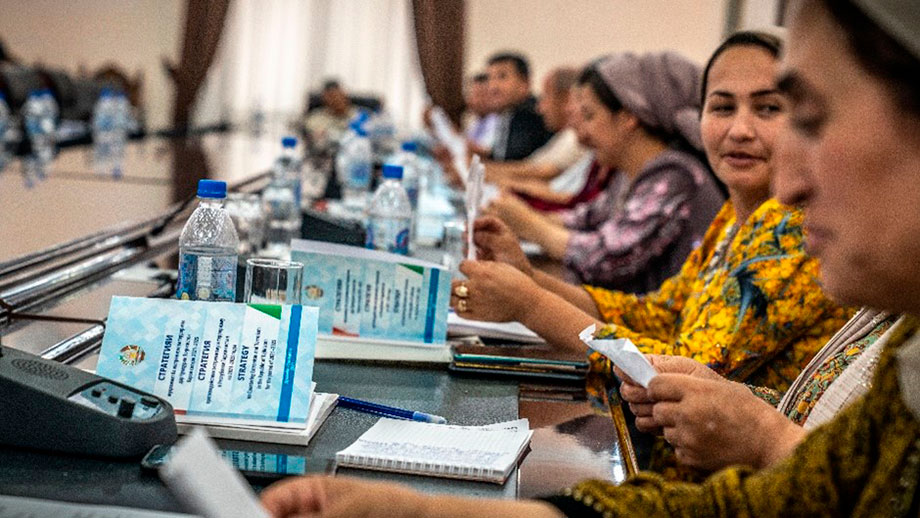
Besides a folder with the agenda, paper and pen, participants received a printed copy of the booklet of the national Strategy, printed handouts of legal texts as well as all presentations and documents in electronic version on a flash disc.
 |
 |
Reachout Statistics
The following table gives an overview on the total number of participants as well as male and female numbers per training per district/jamoat. In bigger districts or districts with a high potential of radicalization, more than one training was conducted. The selection of districts/jamoats and participants was done in close cooperation with the General Prosecutor’s Office.
| № | Data | Region | Male | Female | Total |
| 2022 | |||||
| 1 | 20-21 September | Dushanbe, Sino District | 16 | 6 | 25 |
| 2 | 27-28 September | Dushanbe, Firdavsi District | 23 | 4 | 27 |
| 3 | 11-12 October | Dushanbe, Shohmansur District | 17 | 4 | 21 |
| 4 | 17-18 October | Dushanbe, Somoni District | 18 | 4 | 22 |
| 5 | 25-26 October | Dushanbe, Rudaki District | 31 | 5 | 36 |
| 6 | 8-9 November | Tursunzoda | 16 | 4 | 20 |
| 7 | 15-16 November | Vahdat | 19 | 4 | 23 |
| 8 | 24-25 November | Hisor | 18 | 6 | 24 |
| 9 | 6-7 December | Varzob | 18 | 8 | 26 |
| 10 | 8-9 December | Fayzobod | 23 | 3 | 26 |
| 2023 | |||||
| 1 | 14-15 March | Kulob | 18 | 12 | 30 |
| 2 | 16-17 March | Kulob | 19 | 7 | 26 |
| 3 | 27-28 April | Kushoniyon | 19 | 10 | 29 |
| 4 | 2-3 May | Panjakent | 26 | 6 | 32 |
| 5 | 4-5 May | Panjakent | 30 | 6 | 36 |
| 6 | 16-17 May | Norak | 26 | 8 | 34 |
| 7 | 18-19 May | Nurobod | 22 | 4 | 26 |
| 8 | 13-14 June | Isfara | 19 | 13 | 32 |
| 9 | 15-16 June | Isfara | 14 | 10 | 24 |
| 10 | 20-21 June | Isfara | 17 | 14 | 31 |
| 11 | 11-12 July | Istaravshan | 23 | 8 | 31 |
| 12 | 13-14 July | Istaravshan | 14 | 10 | 24 |
| 13 | 18-19 July | Istaravshan | 13 | 8 | 21 |
| 14 | 08-09 August | Spitamen | 24 | 10 | 34 |
| 15 | 10-11 August | Spitamen | 18 | 10 | 26 |
| 16 | 26-27 September | Kushoniyon | 20 | 6 | 26 |
| TOTAL | 522 | 190 | 712 | ||
 |
 |
 |
 |
Outcomes
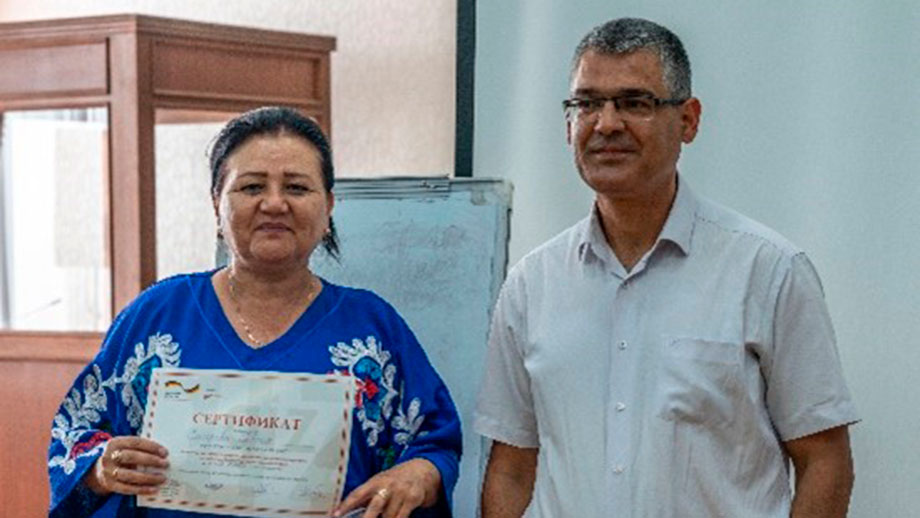
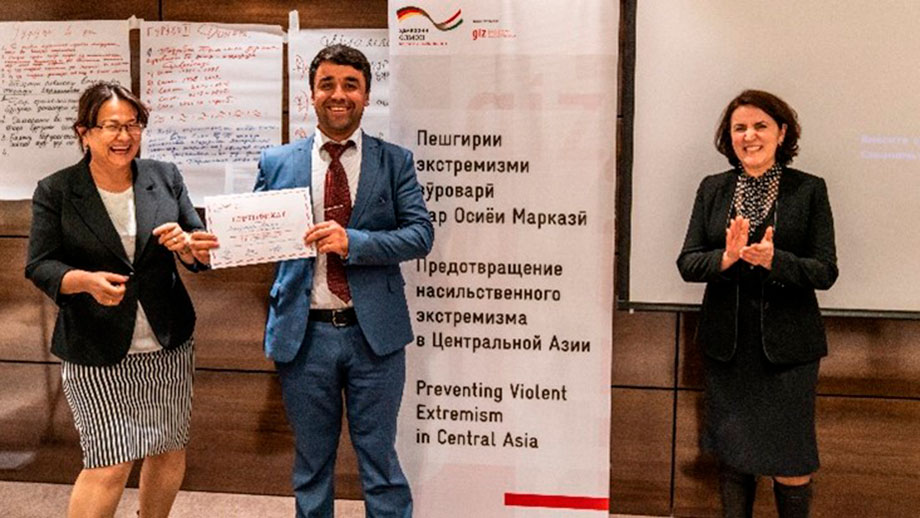
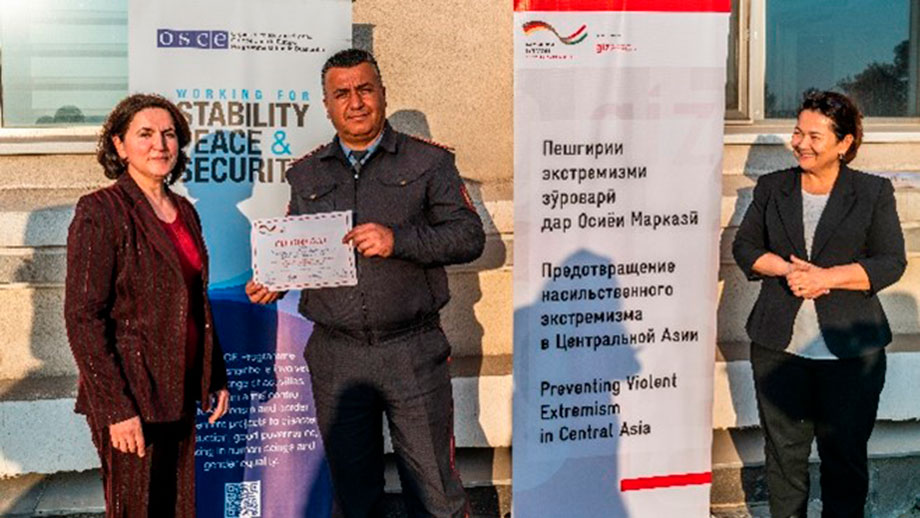
The project undertook considerable efforts to systematically gather participant’s feedback and to estimate the outcome of the trainings. Taking into account the local culture of politeness and not naming negative things directly, all feedback methods had considerable limits in measuring learning outcomes.
A pre- and post-training questionnaire was developed and circulated before and after each training. Principal methodological challenges in developing a questionnaire to measure learning success were not fully overcome. Moreover, due to a lack of discipline by participants to fill in the questionnaires(many filled only the pre- or the post-training questionnaire, many left several questions unanswered), the sheets did not provide fully reliable information respectively did not allow for in-depth analyses on the learning outcomes.
Generally, the overwhelming majority of participants testified that they had gained a better knowledge about extremism and terrorism, about the Strategy and the role of civil society. The majority indicated that basic concepts, methods of problem analysis as well as knowledge about the Strategy were of most use to their future work. Test questions going into further detail were often left unanswered or answers did not allow a cross-cutting conclusion about the quality and depth of understanding. Feedback regarding the applicability of the learned content to their own work reality was much more blurred and did not provide a clear picture.
Besides the questionnaires, an oral feedback was routinely requested at the end of the second training day and points were collated on a flip chart. In these feedback rounds, testaments of participants focused on the setting and organization of the training including the trainers approaches mainly. Little or no content-related oral feedback was given apart from generic statements like “learned much”, “understand better” or the like.
 |
 |
 |
 |
As a third lever to assess learning outcomes, selected informal talks were held with participants over a coffee, at the lunch table or on other occasions. Again, politeness, a habit of not speaking frankly and generally being cautious to utter personal opinions, have to be factored in. Taking the limits into account, the feedback gathered in these informal talks can to a certain extent be considered a corrective to the other levers. In the following, selected quotes stand for the overall direction of feedback received:
|
“The topic is not new to us, we (5 women) already attended meetings concerning the topic, but they were very formal and theoretical. It’s the first participative training where practical tools for our daily work are introduced.” (a district employee from Kushoniyon, April 2023)
“Many didn’t know the difference between terrorism and extremism. Already after the first day, talking to some participants during the break, I noticed how their understanding of the topic improved. Thanks to this training.” (a prosecutor from Nurak, May 2023) |
 |
|
 |
“In the future we plan to do seminars with teachers and pupils to raise awareness to the problem.” (another school director from Kulob, March 2023)
“It is important to sit together with actors of different authorities, deepen the knowledge about the topic, important to learn about the reasons of radicalization, I believe we can use the information in the places we work” (a district employee from Kulob, March 2023) |
|
|
“It was interesting to learn about the preventive character of cultural and sport events.” (a school director from Isfara, June 2023) “We knew about the strategy but in that detail we didn’t and especially that every state actor has clear tasks according to the strategy.” (a district employee from Nurobod, May 2023) |
 |
|
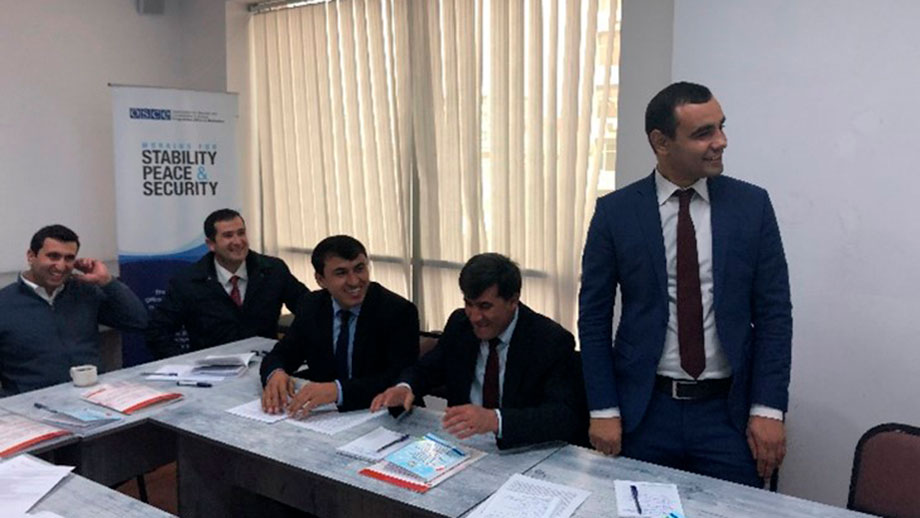 |
“Today the cooperation between state authorities, local CSOs and international organizations is quite week, I understood the importance to cooperate more to counter and prevent violent extremism successfully.” (a district employee from Isfara, June 2023) | |
| “We learned a lot of important things during this seminar and it was a great consultation. We actually already knew what is extremism and terrorism but now we became aware about its origin, from where (which factors) it emerges and through which ways it finds it’s way to our youth. We can use that in our future work in the school.” (school director from Kulob, March 2023) | 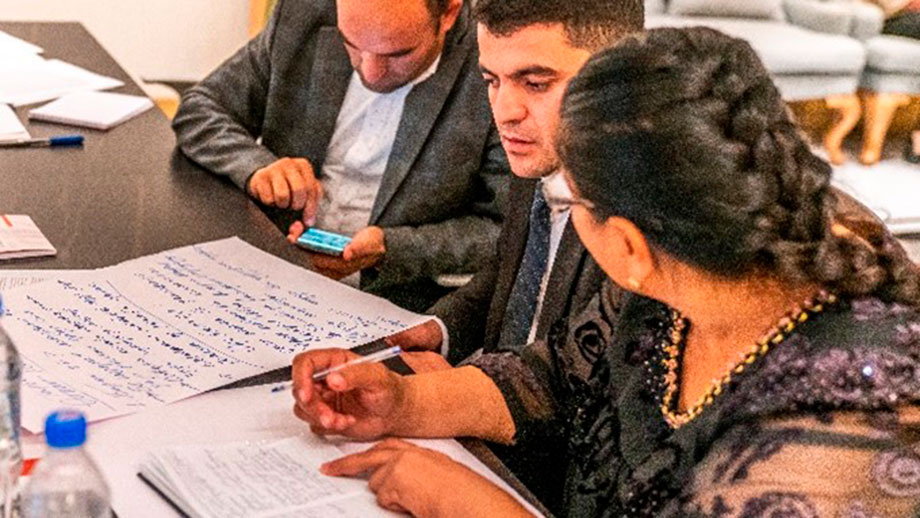 |
|
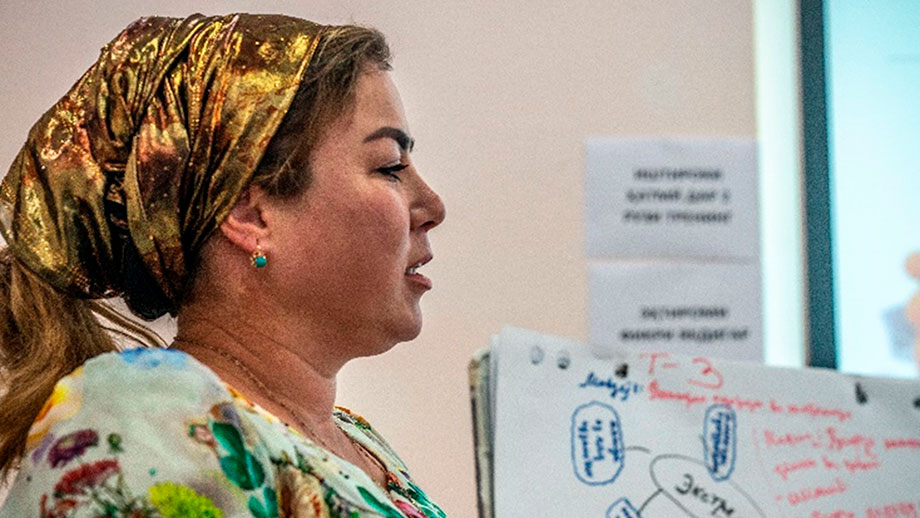
“I didn’t know what radicalism is. Now I understand better about the factors which can lead to radicalization.” (a participant from Istaravshan, July 2023) “It was interesting to have seminar were people from different agencies and institutions came together. It is important to cooperate in future.” (a district employee from Spitamen, July 2023) |
 |
Taken together, a reliable statement about the learning outcomes cannot be made. Based on the three levers of assessment, we can assume that regarding the deepening of knowledge and understanding about the phenomenon of extremism and terrorism, the Strategy and the crucial role of civil society and interagency cooperation, the trainings were successful. To what extent this better knowledge and understanding led to a different practice cannot be said. Moreover, strong systemic limitations to initiate change, have to be factored in. More long-term accompaniment of individual participants of the trainings would be needed to assess their application of learned content into daily practice.
